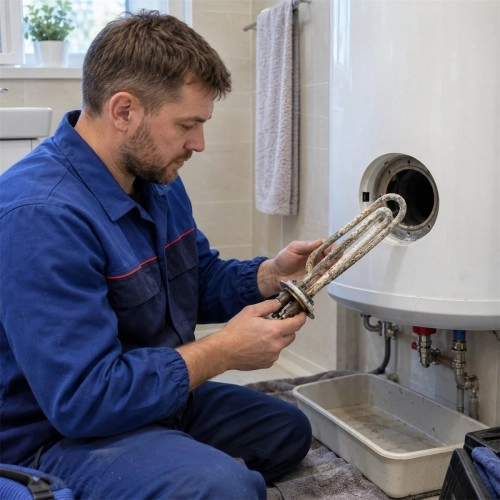
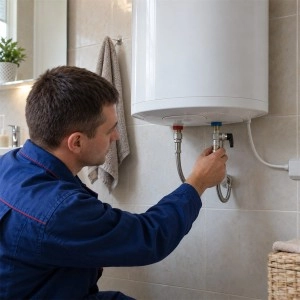
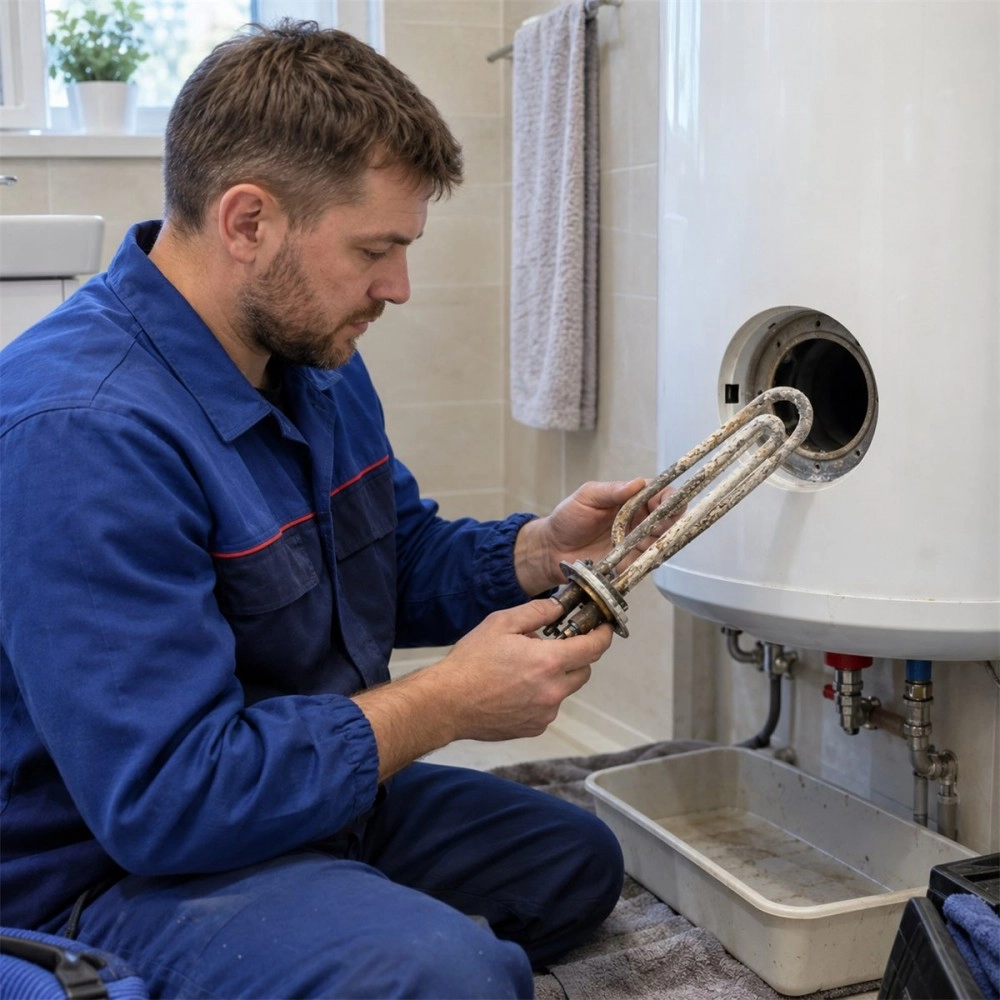
Mastergaz cleans, diagnoses and repairs electric storage water heaters across Kyiv. Standard cleaning follows a public capacity-based price grid. Repair work, parts and any extras are confirmed after inspection and carried out only after approval.
When to book a technician
- the water does not heat or takes much longer than usual;
- the unit is noisy, smells unusual or switches off;
- water leaks from the cover, flange, valve or connections;
- the circuit breaker trips or the cable and plug overheat;
- the tank, heating element and magnesium anode need preventive service.
If you notice an electrical tingle, a burning smell, or a leak near electrical parts, stop using the unit until it is inspected. Do not dismantle it yourself.
What full cleaning includes
- confirming the make, model, capacity, symptoms and access;
- safe isolation, draining and opening the service access;
- removing deposits from the tank and cleaning the heating element;
- checking the element, anode, gasket, flange, valve and connections;
- labour to replace one standard anode when required; the anode itself is extra;
- reassembly, refilling, leak testing and a result check.
Full cleaning prices
Up to 30 L — UAH 1,490; 31–50 L — UAH 1,590; 51–80 L — UAH 1,790; 81–100 L — UAH 1,990; 101–120 L — UAH 2,290; over 120 L — from UAH 2,690. These prices apply to a standard design. Parts are extra.
For flat, twin-tank or other complex designs, the base price is selected by total nominal capacity and a surcharge from UAH 700 may apply. Removal and refitting of a horizontal unit starts from UAH 720. Difficult access without removal is UAH 500. The same difficulty is not charged twice.
Repair and diagnosis
The minimum total for an on-site order with repair work is UAH 1,000. If no work is carried out, call-out and diagnosis are UAH 600. Parts are approved separately.
Heating-element replacement labour starts from UAH 800 as a stand-alone repair and from UAH 450 during full cleaning because the unit is already open. Replacing one anode during other approved work starts from UAH 350 when that labour is not included in the package.
How the booking works
- Submit the form, select “Order Calculation”, or call us.
- A coordinator confirms the symptom, district, approximate capacity and nearest available time window. Photos help us give a preliminary range.
- The technician inspects the unit and confirms the required work and price.
- Any extra work or parts require separate approval.
- You check the result, receive the service report and pay the agreed amount.
Timing, documents and warranty
Most standard jobs are completed in one visit, but duration depends on the model, deposits, access and fault. An urgent call-out with a UAH 400 surcharge is offered only when a technician is available. Completed work has a 24-month warranty under clause 9.2 of the Mastergaz public offer. Check the replacement part’s warranty terms in its documents.
Why Mastergaz
We serve all Kyiv districts, agree on an arrival window, publish standard cleaning prices, and do not perform extras without approval. Use “Order Service” or send photos to request a preliminary estimate.
Need a new water heater installed? See installation terms.
Works: Mon–Fri 09:00–18:00; outside these hours by prior agreement and subject to technician availability. Online requests can be submitted 24/7. Completed work has a 24-month warranty under clause 9.2 of the Mastergaz public offer.
Frequently asked questions
What details help agree the work?
Provide the make, model, capacity, symptoms and access conditions. Photos of the rating plate and installation location help establish a preliminary range.
Is a new anode included in the cleaning price?
Labour to replace one standard magnesium anode is included in comprehensive cleaning when needed; the anode itself is paid separately.
How are repairs agreed?
The technician inspects the water heater and agrees the cost of the specified scope. Additional work or spare parts require separate agreement.
Can I request an urgent visit?
An urgent visit with a UAH 400 surcharge is possible only when a technician is available.
What determines the duration?
Most standard jobs are completed in one visit, but duration depends on the model, deposits, access and faults.
 Operator of Technical Maintenance